Building a Book
Tales of a Not So Tiny House documents the innovation and artistry behind a one-of-a-kind dwelling.

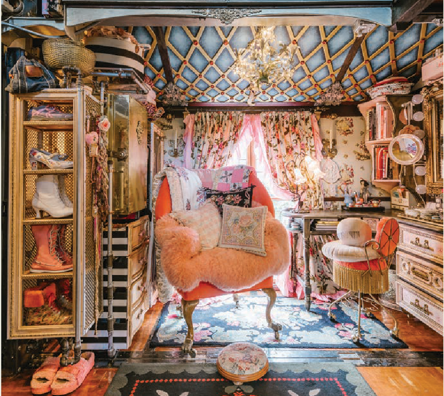
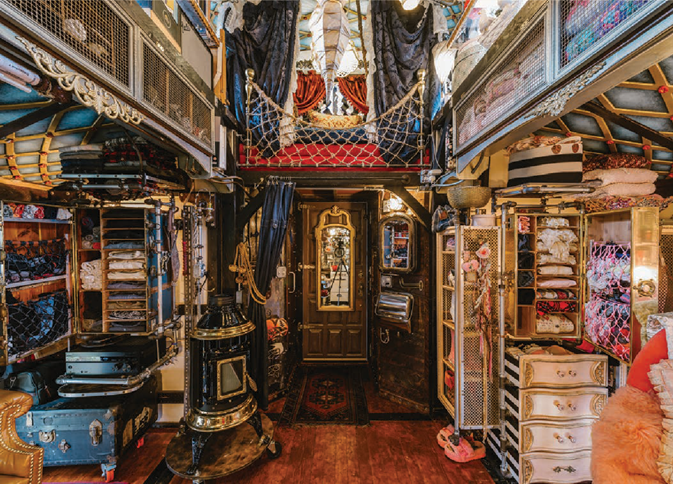
Chloe Barcelou and Brandon Batchelder’s mobile tiny home is fit for a fairy tale. PHOTO BY MORGAN KARANASIOS
Ten years ago, when Chloe Barcelou and Brandon Batchelder were looking for a way to overcome their creative and financial frustrations, the couple knew they had the skills and resources to do it, and forged ahead to build a future for themselves. Over the next decade they would expertly and efficiently cobble together a mobile tiny home fit for a fairytale.
This amazing DIY journey is captured in their recently published coffee table book, Tales of a Not so Tiny House. The happy accident came about when Barcelou posted a picture of a gingerbread-style cottage, and it grabbed the attention of a literary agent who subsequently stumbled on Barcelou’s posts of the enchanting tiny home. The agent pitched the book to Kathleen Jayes, a senior editor at Rizzoli. “I had never seen another house like it, and I was so inspired by their story,” says Jayes. “So many people can relate to the difficulties of finding affordable housing; I loved how Chloe and Brandon found a way to tackle the problem themselves, and in such an artistic way. It was a real joy to work with such creative spirits.”

PHOTO BY JENNIFER BAKOS
Chloe and Brandon originally pitched the book as a DIY guide for other aspiring tiny-home builders, but Jayes steered them away from illustrating the building process and toward showcasing the beautifully crafted and meticulously furnished home. This new direction for the book worked well for the couple, who were more than happy to focus on the creative aspects of their journey.
The duo behind the 256-page book describe the writing process as both fun and challenging —adjectives that also apply to their decade-long home construction project. They each contributed to the captions and Batchelder wrote all the chapter openers and added both sentimental stories and philosophical thoughts. “The idea I really wanted to get across in my writing is that people have been doing this forever,” he says. “It’s primitive and primal, and we wanted to share that essence. We wanted to explore the idea that what we’ve traditionally done can still be brought into the modern world.”

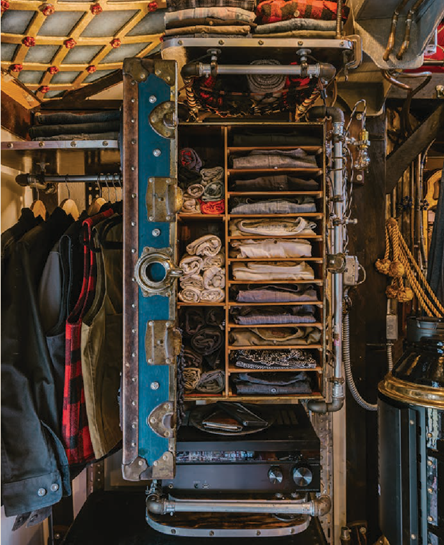
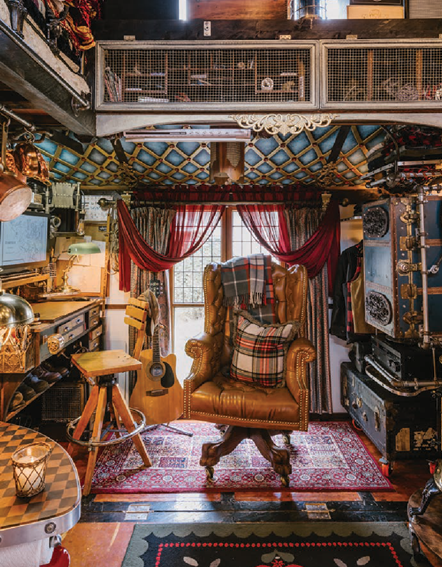
Originally featured on HGTV’s “Tiny House, Big Living,” the home was built almost entirely from recycled finds from film sets, flea markets, thrift stores and junkyards.
To bring this vision to life, no effort was spared to ensure that the accompanying photos were as whimsical and original as the house itself. When the couple started out, they bought a camera and took pictures of the building projects almost daily. They worked with a friend for hours at a time selecting and editing their favorites.
Later, after the house projects were completed, they began creating the fantastical images that open each chapter. “That was a fun process,” recalls Barcelou. “We would get dressed up and assemble images of different parts of the fantasies we had in our minds, and then send the components to our photography editor, Joel Robison, who compiled the images together for us.” As an example, the image introducing the first chapter of the book features Barcelou as a mermaid perched on a rock, the tiny house floating on stormy seas.
Lastly, they took on-site lifestyle and beauty shots of the finished house — at least as finished as it could be to meet their deadline. The couple maintains that there is still more work to be done.

The 300-square-foot, handmade home on a snowy day in Lee.
Two shoots were required for this. One involved lifestyle photographer Jenn Bakus sleeping over for two days and shooting the couple living in and using the various features of the home. New Hampshire-based photographer Morgan Karanasios followed up with another two days of beauty shots: details and vignettes of the house without people.
The couple is quick to point out that, in the burgeoning age of AI, the controversial computer system was never once used in the creation of this book. The love and dedication of Barcelou, Batchelder and their creative team have resulted in a coffee table-sized work of art that has appeal for just about everyone who’s even the least bit romantic.
“We always had it in mind to make the kind of book our childhood selves would have found in the school library and snuck off with when we should have been studying,” Barcelou says. “If you’re a child, you may like it for that reason. If you’re an adult, the child in you may for the same. In the end, we hope it leaves our readers with a warm glow.” NHH