Green is In

Janice Randall Rohlf
Editor
Building sustainably isn’t a trend — it’s a path to the future for a healthy planet.
Three years ago, New Hampshire Home added two new categories to its annual Design Awards: Energy-Efficient Home and Net-Zero/Net-Zero Ready Home. This was in response to a growing awareness that going “green” — once considered an anomaly — was becoming the standard in homebuilding, both by choice and mandate. Every year since we added these Green Design categories, the number of submissions has increased.
Today, as more and more homeowners are choosing to build or renovate, conversations around energy efficiency, responsible material choices and long-term durability are no longer the exception; they are central to good design. Equally encouraging — and the homes we feature in this issue are living proof — is that sustainability doesn’t mean sacrificing beauty or comfort. Nor originality.
When the owners of a home on Squam Lake (page 54) were discussing their needs and wants for their future retreat with their architect, foremost was to maintain the modest footprint by the water, outfit the cottage for year-round living, and build a sustainable home respectful of the surrounding, mature forest, all within a modernist vocabulary. The story of this tree house-like home is one you don’t want to miss.
Energy-Star Certified, a young couple’s stunning, modern home in the White Mountains (page 64) is engineered to conserve power while withstanding the New England climate. It operates entirely without fossil fuels, relying instead on geothermal heating and cooling, bio-ethanol fireplaces, induction cooking and a heat-pump washer and dryer. “Every system in the home was designed to eliminate fossil fuels while enhancing comfort and efficiency,” says the homeowner.
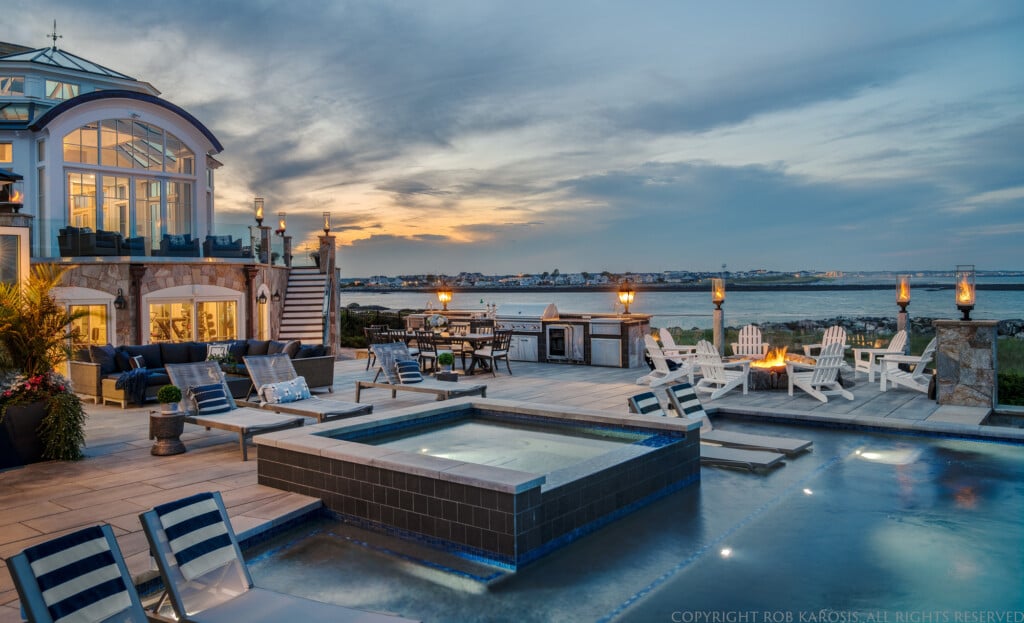
And, in an interesting twist at our feature home in Rye (page 72), when the homeowners were ready to install a pool, they were surprised to learn that their town requires that a new pool be chemical-free, which is sure to become an increasingly popular way to promote a healthy environment. These pools are easy to maintain, too.
In addition, building sustainably is about prioritizing the use of local and regional materials like responsibly harvested timber, New England stone or reclaimed architectural elements. It’s about creating homes that work hard, tread lightly and endure.
As New Hampshire architect Tracy Kozak says in her interview (page 30), “Our buildings have to maintain the opportunity for everyone to be able to replenish our spirit and our health.”