A Unique High-Altitude Garden
Thanks to a series of devoted homeowners and professionals, Tiadnock’s splendor shines brighter than ever.

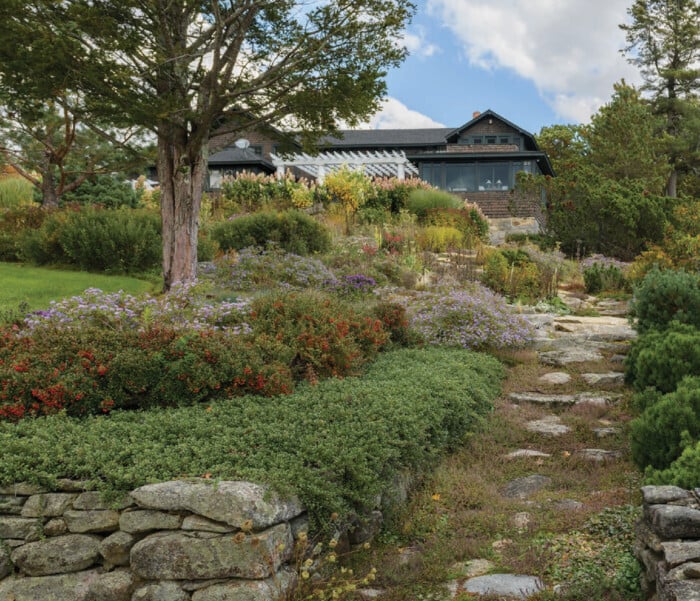
There is a 180-degree view from the pergola-topped terrace, and multiple stone pathways wind down the slope through the gardens.
Once a farming community, by the late 1800s Dublin had become a popular summer retreat for wealthy city dwellers. Drawn by the fresh mountain air, pristine lake and scenic views, they stayed at local inns and boarding houses. In 1872, Boston widow Mary Copley Greene was one of the first to build a summer cottage on the lake, but eventually she purchased several hundred acres of farmland and offered parcels to her family and friends, many of whom were artists, writers and scholars.

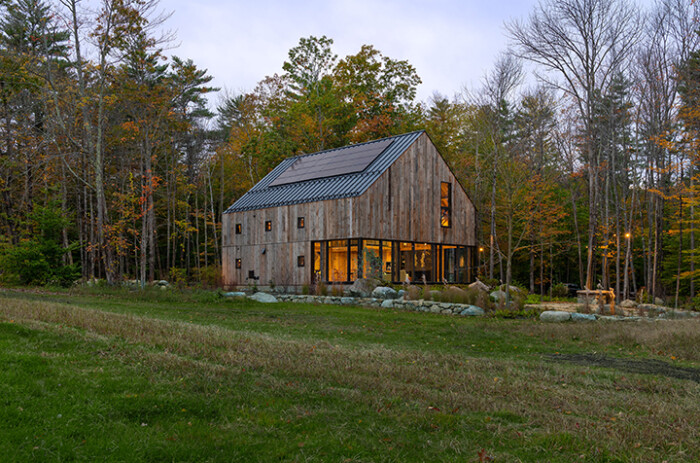
Artist Belle Greene designed several studios on the hillside overlooking Mt. Monadnock for herself and her friends. In 1912, she built this one at Tiadnock for her brother.
The last house she had built was for her son, playwright Henry Copley Greene. Perched high on a rocky hilltop above the lake, it has had several names over the year — Lone Tree Hill, High Winds, Tiadnock and Windy Hill — all inspired by the elevation, exposure to the elements and proximity to Mount Monadnock.
In 1905, Mark Twain rented the house and wrote about his time there in a letter to a friend. “We like it here in the mountains. The summer homes are high perched and have contenting outlooks. The house we occupy has one. Monadnock, a soaring double hump, rises into the sky at its left elbow — that is to say, it is close at hand. The mountain and valley and its framing hills make an inspiring picture to look at, for they are sumptuously splashed with the richest dyes the autumn can furnish.”

The northern slopes of Monadnock were the subject of various paintings by artist Abbott Thayer, who also lived nearby and was a friend of Twain’s.
When Coleman and Susan Townsend acquired the property in 1993, he set about to reclaim that view. “It was so overgrown that you could only see the very top of Monadnock, not the lake or the Vermont hills,” he says. “It was a surprise as the view revealed itself.” In renovating
the house and gardens, over the years they brought in some of the area’s best professionals.

Top of the “pinetum” where Robert Gillmore planted low-growing evergreens including Juniperus horizontalis ‘Bar Harbor’ and Pinus sylvestris ‘Albyn prostrata’ in pockets of soil between the rocks.
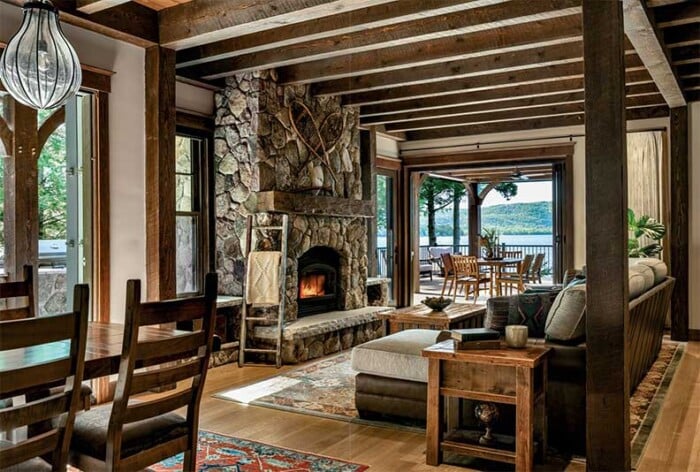
Architect Dan Scully remembers the view looking down the long valley with the mountain sitting off to one side like an afterthought. “Our renovations to Tiadnock linked the interior to new exterior gardens, added two classical pergolas over porches facing the long view and clarified the entry,” he explains. Using an old photograph as a guide, they returned the Shingle-style house to its original dark brown color, making it a better backdrop for the new plantings. “At Tiadnock it was always about the gardens — that was our principal focus,” he says.
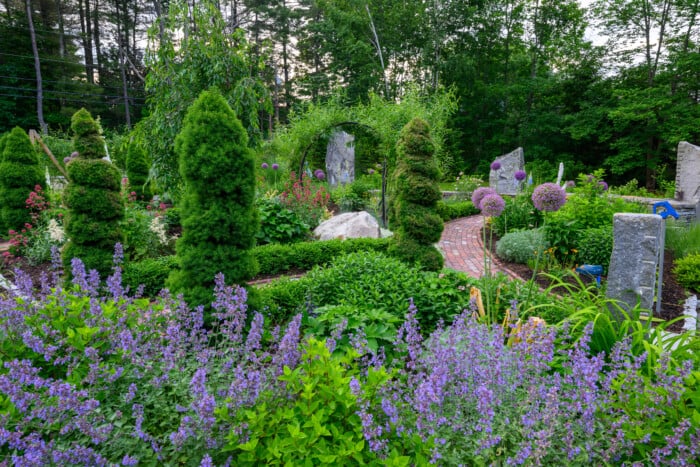
Townsend wanted a natural looking landscape but with some formality near the house. Garden designer Bill Noble worked to make the main entry, where you step down into the sunken garden to reach the front door, more welcoming and to marry the new vegetable/cutting garden with its surroundings. Then he was faced with the challenge of mitigating the steep slope leading from the house to the artist’s studio, choosing what should remain and what to edit, as much as what to add. He started with a perennial border just downhill from the porch. “If a gardener wants color and plants but also has an extraordinary view, how do you accomplish both without denigrating either one?” he asks. “Using a soft palette of yellows, grays, white and greens, he created a border that would not compete with the view,” says Townsend. “He taught me restraint!”

Tough zone 3 plants including eryngium ‘Rattlesnake Master,’ Joe Pye weed, and prairie dropseed populate the slope alongside yellow Verbascum chaixii ‘16 Candles,’ daisies, salvias and gaura, to name just a few.
Ten years later, garden designer Gordon Hayward cleared the woods along the right side of the driveway, making it more walkable as well as opening up a view of Dublin Lake. “One of my main jobs was to design the pool garden below the porch.” This meant the perennial border had to be moved to its new location, where it still thrives in a moist area under the tall pines. “I then designed the walk from the far end of the pool down through the rocky slope below it,” he says. Among other improvements, he also redesigned the flat area between the front door and study door. “My crew added a number of 24-inch to 36-inch Goshen stones leading to a new panel of lawn,” he says.
To curate the remaining wooded area, five years later, landscape designer Robert Gillmore, with the help of property manager Tom Vanderbilt, cleared weeds and brush and added to the existing understory of smaller trees and shrubs by planting more rhododendrons, mountain andromeda, leucothoe and mountain laurel. He suggested removing more of the giant white pines that obscured the mountain view and created a “pinetum,” a natural-looking ledge garden of low-growing evergreens and taller Mugo pines, on the steep rocky slope to the left of the house to soften the dramatic drop-off. They now offer a block of different shades of green. Townsend loved the evergreens and over time brought many of them up from the slope to use in other places.

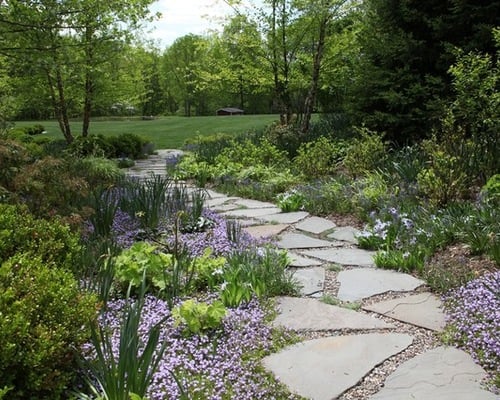
The path leading out of the sunken shade garden is carpeted with fragrant thyme. Boxwood, hellebores and dwarf aruncus line the right side, where they are sheltered from the wind by the house.
The most recent garden designer at work on Tiadnock is Laura Trowbridge. The Townsends had visited her property during a Garden Conservancy tour and were impressed by her style. “Her garden is spectacular,” Townsend says. “Her interest in unusual plants brought us together.” At Tiadnock, her first course of action was to rejuvenate many of the early plantings that had become overgrown. She added more color to the sunken garden and, along the stone paths, planted indestructible ground covers and creepers which have rooted between the rocks. “Creepy crawly plants love it here!” she says. She has found that, along with low growers, plants that can take the sun, wind and lean soil are a necessity. Townsend wanted it to look wild and natural, so many native plants are repeated in the exposed beds. She worked with Townsend for nine years until he sold the property in 2022 and continues to manage the gardens for the new owners.
One constant presence at Tiadnock for the past 30-plus years is property manager Tom Vanderbilt. “We couldn’t have done all this without his enthusiasm, energy and expertise,” says Townsend.
RESOURCES
Robert Gillmore
evergreenfoundationnh.org
Gordon Hayward
haywardgardens.com
Bill Noble Gardens: Design and Preservation
billnoblegardens.com
Scully Architects
scullyarchitects.com
Laura Trowbridge Garden Design
lauratrowbridge.com