Counter Culture
Kitchen designer Linda Cloutier says never underestimate creativity and patience.

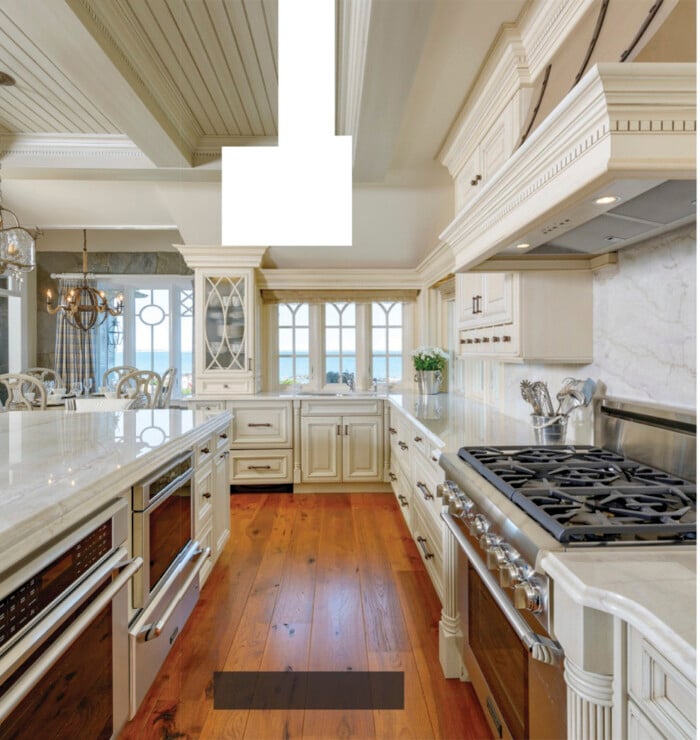
Cream-toned cabinetry, richly detailed millwork and a generous marble-topped island give this light-filled kitchen a refined yet welcoming presence.
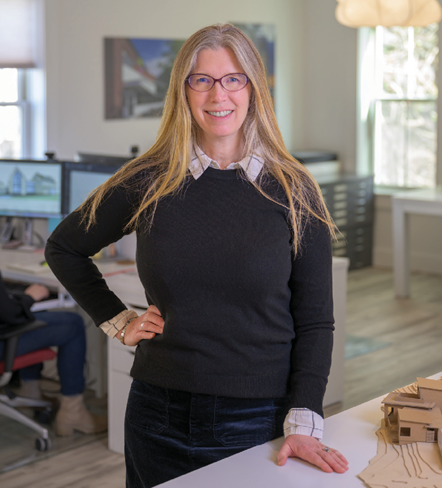
Although a native of Syracuse, New York, Linda Cloutier has made New Hampshire her home since moving to Stratham in 1990 and founding her own design company, Lifestyles Kitchens and Baths, two years later. After selling that business in 2002 to spend time raising her daughter, Hannah, she opened Linda Cloutier Kitchens and Baths in Greenland 14 years ago.

Linda Cloutier
Cloutier spoke with New Hampshire Home about transitioning from designing clothes to designing kitchens, still drawing designs by hand and the importance of getting to know her clients.
Initially you wanted to be a clothing designer?
When I went to Green Mountain College in Vermont, it was for designing clothes. But then I went to New York City looking to make it big, and I didn’t like it at all. There was a course in interior design at Green Mountain, so I took that and felt like it suited me more.
You got your start in design pretty much on a whim, with no previous experience. How did that happen?
It was in Manchester, Vermont, and I was there skiing for the day. I just stopped into a place called Kitchens By Design and said I’ve always been intrigued by the building and that I liked the look of it. They hired me on the spot. Thanks to them, I’m still designing 45 years later.
Weren’t you pretty much self-taught
as a designer?
I took some courses, but I learned by doing it. When I took my first job, they said, just go for it. I made my share of mistakes, like anyone. Going out on the job site was the best training. I learned how to read a measuring tape, the differences between maple, cherry and walnut. It made me think more because I was doing it, and not sitting in a classroom listening to somebody tell me how to do it.

An expansive wood island, dramatic pendant lighting and a richly patterned range surround create a kitchen designed for both gathering and culinary creativity.
What are the most important skills one
must have to be a successful designer?
The big thing is to listen to your clients. Try to give them what they want, and if it does not work, for whatever reason, give them the reason as to why. Designing comes with creativity and patience.
How important is it to get to know
your clients?
It’s important to know how they live, how many kids they have, if they have pets. Do they cook or bake? Do they grocery shop once a week? Who does the cooking? Do they entertain a lot? The more information I can get, the better the design.
Even in this age of computers, you still
hand-draw your designs. Why?
I love sitting at the drafting board and figuring out the math and what the options are. It’s a skill that few designers use today. The fact that it’s a slower process helps me in my designs. I put myself into that kitchen, and I think, where am I going to store all my things, how is this kitchen going to operate? I like that part. But I also have Lori Genovese (my colleague and designer), who will then put everything onto the computer.

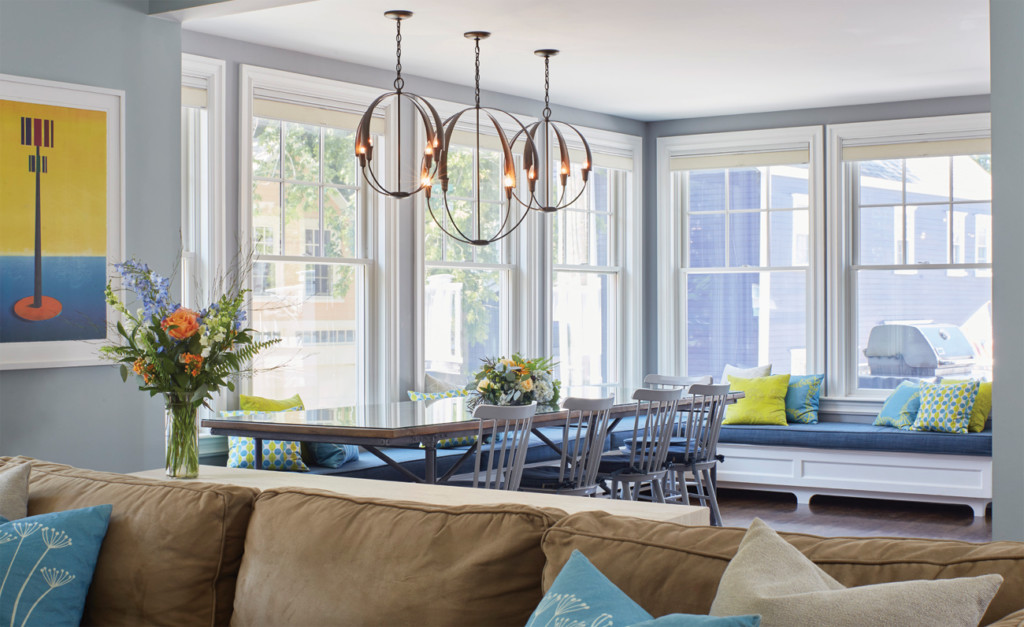
A soft gray island, luminous stone surfaces and crystal chandeliers bring understated elegance to this bright and gracious kitchen.
Do you focus on certain aspects of design?
I’m more in the traditional style. I’m not into minimizing cabinetry, for example. I like to put in more detail, maybe some brackets and a fancier molding.
You like solving design puzzles.
Can you provide an example?
Let’s say a client buys a 48-inch-wide refrigerator or a 60-inch stove; how am I going to make that fit? That’s the challenge. That’s the puzzle you need to solve to make it all work.
What’s the biggest mistake you see
homeowners make?
They tend to overbuy with appliances and try to fit it all in. Sometimes, they buy the appliances before I’ve even designed the kitchen.
Where do you turn for inspiration?
I love to look at magazines for kitchen ideas. I’ll do that before I’ll sit at a computer. It’s fun to see how people are doing kitchens outside of New Hampshire, like in New York or Connecticut or the Hamptons. I see that and I think, “Oh yeah, that’s kind of different.”
What’s New Hampshire’s best-kept secret?
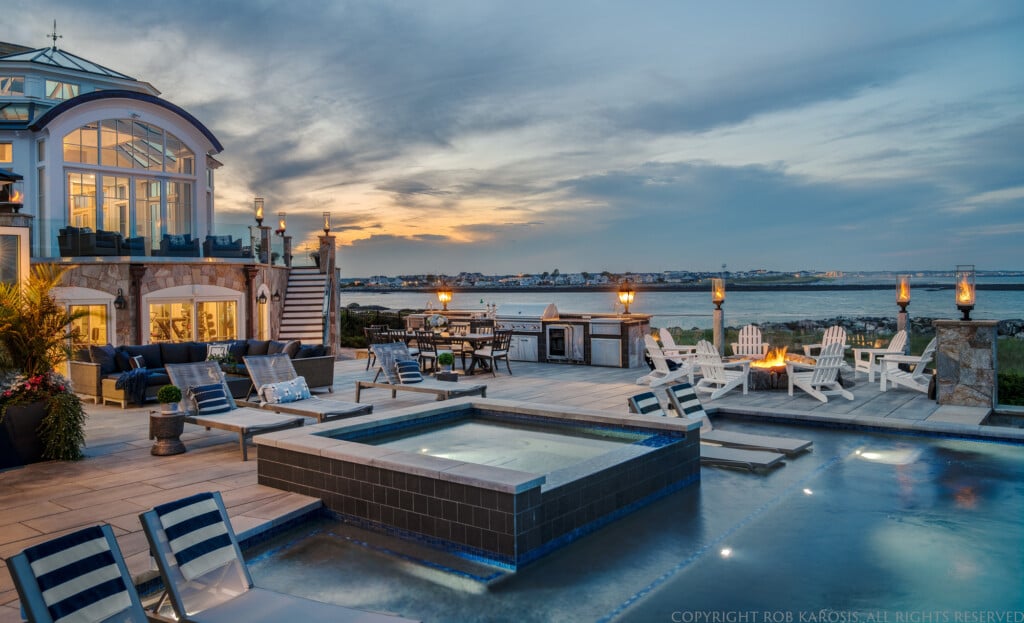
When I travel and people hear I’m from New Hampshire, they think of the mountains and the lakes, but they don’t think of us as being on the seacoast.